

About — BlueSky Workforce
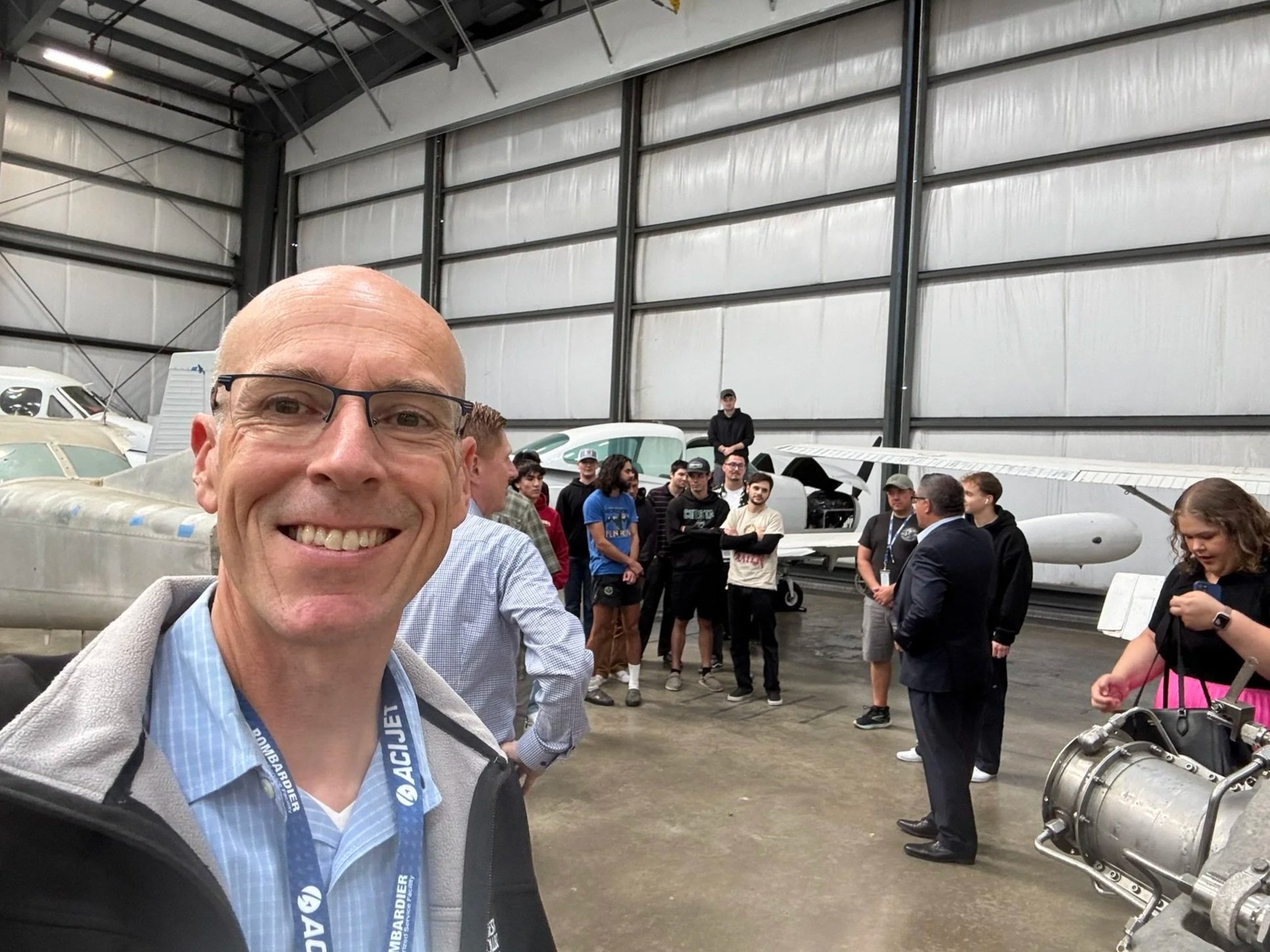
"We need a Ron for that."
— Relayed by Dr. Aubrey Priest, describing how college leadership at Cuesta College talks about complex program launches
About Ron Overacker
I didn't start as a consultant. I started as someone who believed that flight training deserved the same academic legitimacy as any other career pathway — and that students who earned a degree alongside their certificates would have a better shot at getting hired.
That belief is what drove me to build the first helicopter pilot training program in California to be fully approved by both the ACCJC and the California Chancellor's Office. Starting in 2009, I worked through a contract agreement between my own helicopter flight school and College of the Sequoias in Visalia, navigating FAA flight training requirements, California curriculum systems, and two institutional approval structures simultaneously. We launched. Students enrolled. The program was real.
In 2014, changes in VA approval requirements exposed structural problems we hadn't built correctly from the beginning. The program was shut down. I closed the school. And I've carried that with me ever since — not as something to hide, but as the most instructive experience of my professional life.
I know what happens when a program isn't built right. I know how it looks fine from the outside until it isn't. I know the gaps that regulators find, the dependencies that get missed, and the cost — to the institution, to the faculty, and most of all to the students who were counting on it.
That knowledge is the foundation of everything I do now.
How I Think
I grew up in my family's structural steel manufacturing and erection business in the Central Valley. I worked as a foreman, then project superintendent, then operations manager. We hired welders, ironworkers, and skilled tradespeople. We shipped fabricated steel projects to Japan. I learned early what it means to run an operation — to make payroll, to manage schedules, to hire people whose skills either meet the standard or don't.
When I opened my own helicopter flight school, maintenance wasn't an abstract concept. It was survival. We operated across two locations with fourteen helicopters and held both an FAA Part 141 and Part 135 certificate. When something wasn't airworthy, we weren't grounded academically — we were grounded operationally. I know what that costs.
That background shapes everything about how I approach workforce program development. When I sit across from an employer advisory committee, I'm not translating their concerns into academic language. I'm thinking the same way they are. When I design a program, I'm not guessing what employers need from graduates — I've been the employer who needed them and had to live with the gap when they weren't ready.
I bring an operator's perspective into every program I build. Whether it's aviation maintenance, fire technology, law enforcement, or advanced manufacturing — I understand what it means to run the thing, not just study it.
Coming Back with More
After the helicopter program ended, I spent nearly ten years in law enforcement — including the last four as a detective. That wasn't a detour. It built something in me that I carry into every program engagement.
Investigators don't take things at face value. They follow dependencies. They ask the uncomfortable questions. They look for what's hidden in plain sight — the structural gap nobody named, the assumption everyone made, the detail that will matter six months from now when the program is supposed to launch. That instinct doesn't stay at the department. When I evaluate a workforce program, I'm not just reviewing documents. I'm looking for where it will actually break.
Law enforcement also gave me deep familiarity with a heavily regulated, high-stakes operational environment — experience that now shapes how I approach public safety and fire technology programs from the inside, not from a distance.
When a dean at Cuesta College reached out about developing an FAA Part 147 Aviation Maintenance Technology program, they weren't looking for a generic curriculum consultant. They needed someone who understood FAA regulations and could write California-compliant curriculum and course outlines — and who had already lived inside the approval process from the inside.
I said yes. And I built it right this time.
What Happened at Cuesta
The Cuesta College Aviation Maintenance Technology program launched successfully and has continued to grow. We run two cohorts of 25 students each. We've built pathways into local high schools. We added a second night cohort to expand access. And when the Aircraft Electronics Association announced recognition of the AEA Basic certification for Part 145 schools, I wrote the avionics addition to extend the program further.
That program compounds because it was designed from the beginning to work — not just to launch.
The results spoke loudly enough that the college began pulling me into other projects. Fire Technology had been stalled for several years before I was brought in. We are now in the final stages of approval. Drone and UAS pathway development followed. Then avionics. Each one built on the same foundation: understand the regulatory environment first, align the institution's resources to reality, and design a program that works.
My law enforcement background makes public safety a natural extension of this work — not a stretch, but a fit.
Why I Do This
I work as a detective. I've learned to look past what's presented and find what's actually true. That instinct makes me better at this work.
But if you want to know why I do this work — the workforce piece, the programs, the students — I'll give you the honest answer.
I have former students who completed the 147 program and are now working in aviation maintenance. I have helicopter students from years ago who are flying EMS today. They find me at events, at job fairs, in parking lots. They shake my hand. They tell me it changed their lives.
And every single time, I well up.
This is not a business to me. This is my life's purpose. The value of this work is not measured in contract hours or apportionment. It's measured in how many students get access to a future they couldn't see before the program existed. It's the student from a rural community who now has a credential and a career. It's the employer who finds local talent. It's the college that committed to something hard and actually delivered it.
I've watched programs launch in the 147 space that are genuinely changing lives. That's not marketing language. I've been there. I've seen the faces.
I built BlueSky Workforce because colleges shouldn't have to figure out the hard parts alone. The work is complicated — regulatory frameworks, curriculum approvals, faculty development, facilities, equipment, industry partnerships, accreditation bodies — and it all has to come together at once. Most institutions have the commitment. What they sometimes need is someone who has navigated that exact terrain before, knows where the ground gives way, and cares enough to make sure it doesn't give way on their watch.
That's what I bring. Not theory. Not templates. Experience — including the kind that came from getting it wrong, carrying it, and learning what right actually looks like.
That's why I will never treat your program like a transaction.
CliftonStrengths Top 5
Achiever · Individualization · Learner · Responsibility · Input
These aren't decorations. They're how I work. I finish what I start. I treat every college as its own institution with its own constraints — not a template to fill in. I research until I understand the regulatory environment completely. I take seriously the trust colleges place in me. And I collect every piece of relevant information before I recommend a direction.